Sunday, April 11, 2010

Cambodia: welcome to the third world


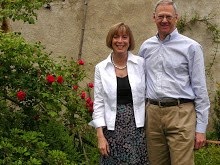
We took advantage of the long Easter/Ching Ming holiday and visited Cambodia for a week.  Although it's only a two hour flight from Hong Kong, Cambodia is a world away.  The first thing we noticed was how flat, dry and dirty the country is.  In Phnom Penh, the capital, there are only a couple of "high rise" buildings of more than 10 stories.  Traffic flows the same way as Guilin (blog March 6), with the addition of numerous tuk-tuks (motorcycle-drawn open carriage).  In the picture on the right, Jeff is standing in front of a row of them. Since our trip to China, we are no longer scared to see cars, motos, tuk-tuks, bicycles, trucks, and pedestrians weaving their way through the streets without any Western safety restrictions.  Jeff says that I'm getting much better at crossing the street!  We noticed that most of the vehicles in Cambodia are Toyotas.


Phnom Penh has many French Colonial buildings - some are beautifully restored (owned by banks, NGOs, and the government), while others have been neglected for 50 years and are slum tenements.  The wide balconies and arched windows reminded us of New Orleans.  Upon our return to HK, I googled "Jewish Cambodia" and discovered that Chabad has recently moved into Phnom Penh.  They are housed in the Colonial building that was the former location of the U.S. embassy! (Chabad Cambodia)

The main tourist attractions in Phnom Penh are the National Museum, the Royal Palace, the Genocide Museum (S-21), and the Killing Fields.  The palace and museum were within walking distance of our charming hotel (on the right), which felt like an oasis after walking for hours in the unshaded 38 degree temperature.


The Museum, built around 1920, is a traditional terracotta structure with a beautiful tiled roof.  The four wings of the building surround a peaceful garden containing a relaxed-looking Buddha.  The Museum houses the world's finest collection of Khmer sculpture, mostly from the Angkorian period (9th-15th centuries).  There were also examples of earlier figures including an imposing statue of 8-armed Vishnu and a giant pair of wrestling monkeys.

The  ornate Royal Palace is just south of the Museum.  The entire complex is surrounded by a 6-foot-high yellow stucco wall.  It takes up the equivalent of two city blocks.  There are guard posts every few hundred metres, however most were unmanned!  The site consists of the king's official residence, temples, stupas, shrines, and gardens.  It was all a bit "over the top", compared to the poverty on the other side of the wall.

I realize that this blog is starting to sound like a travel brochure, so here goes the hard part of the trip.  Poverty.  People living on the streets (taking shelter under a lone palm tree near the Palace walls).  People sleeping/living in the parks.  Garbage everywhere.  Children left free to roam and free to sift through garbage for food or recyclables.  Much of daily life takes place on the street - for example barbers and numerous food stalls.


The Cambodian Civil War (1975-1979), led by the infamous Pol Pot and the Khmer Rouge, completely ruined the country.  Twenty-five percent of the population was murdered (especially the educated populace).  Even the wild animals escaped to Thailand!  The KR left thousands of land mines all over the country - you can't walk two city blocks without seeing maimed victims of these horrendous booby traps - and thousands more are still buried, waiting to be stepped on.  In Canada the orphanages have been turned into luxury condos.  In Cambodia, they house the children of land mine victims.  According to the Canadian International Development Agency (CIDA), Cambodia is an aid-dependant country with a weak government.  Political reforms are difficult to implement, so economic and social progress is slow and fragile.


S-21 (the Genocide Museum) was originally a high school in a residential neighbourhood.  The KR used it as a centre of detention and torture.  The museum is a gut-wrenching testament to the legacy of the KR.  Like other holocaust museums, it is disquieting to see beautiful trees and flowers continuing to bloom, oblivious of the crimes and tortures that took place.  The museum was so disturbing that we decided not to visit the Killing Fields, where 17,000 people were exterminated.  The Killing Fields have been "privatized" and are now controlled by a Japanese company.

On a happier note, there were many many wonderful surprises in Cambodia.  The local Khmer food is delicious!  It is somewhat like Thai food, but even more flavourful.  One of the national dishes is called Amok, and Jeff ate it four or five times during our trip.  Service everywhere is friendly, and even when we were being accosted to hire a tuk-tuk it was always accompanied by a large grin!  Shopping is fun, too, especially in the markets.  Jeff bought some linen fabric in the Russian market (so-called because the Russians used to shop there), and hired a tailor in the market to sew a pair of draw-string pants the same day.  Total cost (including delivery to our hotel): $17.

After two days in Phnom Penh, we were off to Siem Reap, home to the temples of Angkor.  We chose to cover the 300 km by plane, rather than a six-hour bus ride over roads that do not resemble the 401.  Angkor is the main attraction in Cambodia.  It is a UNESCO World Heritage site, containing the remains of the temples of the Khmer Empire from the 9th-15th centuries.  Angkor covers 400 square km.  No, we did not see it all!  Our legs just felt as if we had.

Angkor reminded us of Raiders of the Lost Ark - with no Harrison Ford in sight!  The structures are massive - and it is daunting to think that the sandstone was imported from a quarry 50 km down the river.  In its heyday, Angkor was home to one million people.  It is now an eerie reminder of a lost civilization.
A further calamity of the Civil War was the destruction of many of the statue-lined walkways to the temples.  The KR lopped off the heads of the statues and sold them over the Thai border.  In the photo, you can see an original head, a headless statue, and a reconstructed head (which looks completely fake).  It is a wonder that they did not destroy more of the structures.
We were awed by the size of the temples, the intricate carvings, and the bas relief.

The guidebook (Lonely Planet Cambodia) informed us that Lara Croft Tomb Raider was filmed at Ta Phrom, one of more interesting sites.  The jungle has grown over many of the buildings - man conquered nature, and now nature is reclaiming its own space.


As many of you know, Jeff and I try to cover every inch of places we visit.  On the second day of our exploration of the site, we visited Angkor Wat, and wanted to climb up to the top of the highest temple.  However, the wait line was 20 minutes long, so we decided to do the climb at the end of our third day as a "farewell".  The photo on the left shows the original stone steps leading to the top.  Luckily, a wooden stairway has been installed for easier access.


Local children were everywhere at Angkor, selling postcards, bracelets, and other souvenirs.  The guidebook says that most children do attend school at least half of the time, if their families can afford it.  I bought ten postcards (for $1 US) from a little girl, and as a thank-you she gave me a bangle!

Believe it or not, we actually took it very easy on our last full day in Cambodia.  The heat was a deterrent to returning to the unshaded temples.  We visited a silk farm just outside Siem Reap, where we saw all the stages of silk production.  Rural folk are trained to produce the silk.  The farm is run like a co-op, with a percentage of the profits returned to the employees.  The workers can stay in their villages and be productive there, rather than swarming to the cities in search of work.  Back in Siem Reap, we spent time touring Les Artisans d'Angkor, which includes a school that specializes in teaching wood- and stone-carving techniques to impoverished youngsters.  There is a beautiful (and pricey) gift shop on the premises which sells their products.  We bought a teak apsara (dancing woman) statue, and a lacquered panel (oops, and a silk purse for Dale...).  We thought you would all enjoy Jeff's interpretation of an apsara.

Some parting thoughts and observations:
Canada does not have an embassy in Cambodia (it closed in May 2009).  The embassy in Bangkok is accredited to Thailand, Cambodia, Laos, and Myanmar (Burma).
Cambodia is still a place where backpackers can survive on $10 a day.
There are no McDonalds in Cambodia.  The only chain we saw was KFC.
When possible, we ate and shopped mainly for a cause.
We did not watch the "Final Four" weekend, although we did follow the results on Jeff's BlackBerry.
While waiting for our return flight, we observed some monks checking in.  We were quite surprised when one of them reached into his robe and pulled out a BlackBerry.  Modern times!

Tuesday, March 30, 2010

Passover Seder in Hong Kong

Last night Jeff and I had one of those special moments.  We looked at each other and said "Can you believe we are celebrating Passover on the other side of the world?"
And what a wonderful celebration it was!

We attended the UJC (United Jewish Congregation) Passover Seder at the Aberdeen Marina Club http://www.aberdeenmarinaclub.com/ along with 235 guests.  The venue is elegant.  The tables were set beautifully:  a large lazy Susan held a Seder plate, endless bottles of wine, matzo, salt water, horseradish and charoset (not as good as mine).  The chairs were covered (at no extra charge!) and place cards adorned the table.


We sat at table number 3 and had a lot of fun with our fellow guests.   We were a very international group!  Brazilians, French, American, Canadian, and Hong Kongese.   We elected Anna as our captain - she was responsible for breaking and hiding the Afikoman, and doing other rituals.  All of us knew the words and lyrics to the songs, and we sang loud and clear.

As for the meal, the gefilte fish was terrible, but the horseradish was potent enough to please Joe Kotler!  Jeff was in heaven eating the chicken soup with rock-hard matzo balls.  The main course (chicken, of course) was delicious, and the dessert looked as nice as most Passover cakes and tasted equally bland.

Rabbi Stan Zamuk was entertaining and full of fun as he guided all of us through the Haggadah and all of the traditions.  The female chazan, Shani, led us in all of the familiar tunes.  It was very moving when  the young children went up on the stage and sang the Four Questions with Shani.  Jeff and I were choked with emotion as Stan went around the room and asked people to say the first line of the questions in their native language - we heard French, Portuguese, Spanish, Japanese, Cantonese, Mandarin, Tagalog, and Korean.
The children were mostly well-behaved, but when they became obnoxious they were banished to kids' room where the helpers waited to look after them.

We had a wonderful time, it was lively and joyous and it even made Jeff smile!

"L'Shana ha ba'a b'Yerushalayim".  (Next year in Jerusalem - who knows!)

Sunday, March 28, 2010

Playing tourist in our town

Time flies!  Jeff has been in HK for six months, and I'm ending month three.  Sometimes we feel like we've just "stepped off the boat", but most of the time we feel quite at home.  We have no difficulty navigating the city and its many alleyways and hidden streets.  Most of the time we feel this is "our" city, but, from time to time, we find ourselves in areas where we are the only Western faces and realize we are really just guests.
The expat community in HK is varied with respect to lifestyle.  Some live in apartment hotels - furnished upscale lodgings that come with many services.  Some live in the Mid-levels (our neighbourhood) in "regular" apartments (large and small) - with either their own furniture from home, or with HK-purchased furniture.  Others live up the Peak in larger, fancier apartments.  And many more live "way out" in the New Territories - closer to the Chinese border, quieter, leafier, better-smelling, but an hour away from Central.  A lot of permanent expats start off in the busier areas, and then gradually move away from the bustle.  Quite a few of the permanent expats have told me that they have moved several times during their 10-15 years in HK.  The one common denominator is that everyone rents.
Regardless of where we expats choose to live, each neighbourhood is replete with services - restaurants, cleaners, supermarkets, hardware stores, etc.  In North America, we see the same conveniences repeated in cities and suburbs (Loblaws, Shoppers, Canadian Tire), and the same occurs in HK, except the shops are usually small "mom-and-pop" operations.
I've met a few people who have lived here for 10-20 years.  Most speak almost no Cantonese, although one or two can get by quite nicely.  So far, my vocabulary is limited to hello and good morning, and lots of nods and smiles.  My plan is to take some lessons next fall, although I am torn between learning Cantonese or Mandarin.  Cantonese is more useful in Hong Kong.  Mandarin is the official language of China, and it is taught in all the schools.  Neither is easy.
There are times when we realize that we are strangers here.  When we were in the lobby waiting to enter the venue to see The Platters,  we noticed a crowd of young people taking photos of a pretty Chinese girl.  From the excitement, we realized she must be a celebrity, but to us she was just a pretty face in the crowd.  I took a photo of her, and Jeff asked his staff who she was.  Turns out she's Stanley Ho's daughter,  Josie, who is an actress/rock singer (have any of you heard of her?).  By the way, Stanley Ho is one of the richest men in Asia, albeit a bit of a shady character http://en.wikipedia.org/wiki/Stanley_Ho   We wouldn't have recognized him either!


Our trusty guidebook, Leisurely hikes in Hong Kong, has led us on some interesting walks the past few weekends.  Last Saturday, we walked through Happy Valley, a residential area noted for the cemeteries that line the hills.  The Jewish cemetery was fascinating.  The entrance is through a small gate between a Buddhist temple and school.  The park-like setting makes it a very restful! quiet place.  We took photos of some interesting gravestones, including baby Mary Shaw, and Dina David, who was born in Harbin, China in 1910.  Many Russian Jews also escaped the Revolution by fleeing to Harbin in northern China (Manchuria).  The community eventually migrated south to Hong Kong.


The rest of the cemeteries are next door to each other, beginning with the Parsee cemetery, which was lined with beautiful potted flowers.  Since there are no vultures here, the Parsees bury their dead in lead coffins, rather than erecting a Tower of Silence.  The Christian cemetery had many memorials to ship crews whose boats were lost.  We were not allowed to take photos in the Catholic cemetery so we took them through the gate!  The last cemetery along the road was the Muslim one with very plain headstones in keeping with their culture.


Last Sunday, we walked the markets - separate ones for birds, flowers, goldfish and jade.  The photos speak for themselves.


Yesterday, we walked the Aberdeen Reservoir Trail.  All downhill, but very steep.  The end of the two-hour trek took us into Aberdeen, a working-class suburb of Hong Kong.  We did not see any other expats in that part of town.  We walked along the waterfront, taking photos of the sampans for hire.  We can't figure out why the sampan in this photo had a Hebrew sign (transliteration: Tom's sampan tour).


Tomorrow is Passover.  We will be attending a community Seder sponsored by the UJC (United Jewish Congregation).   The invitation said: "We suggest you bring your Helper to be able to assist you with the children ...  It is recommended they (the children) nap earlier in the day and then eat a hearty snack before arriving to keep them going."

Happy Passover and Happy Easter to all of you.

Sign of the week and fashionista of the week.


Friday, March 19, 2010

Music music music

It's Arts Festival time!Arts Festival Hong Kong

Where else but Hong Kong can we enjoy a week of varied music like this:

Last Saturday night we went to the Concert Hall to hear Cafe de los maestros - musicians and singers from Argentina's golden age of tango.  They are billed as Argentina's answer to the Buena Vista Social Club.  The singers were 85 and 87 years old!  The male singer can still belt out a great tune, but it took him quite a while to shuffle to the centre of the stage (my mother would've been yelling at him to pick up his feet).  The audience was young and local, and they gave the group a standing ovation.

Wednesday evening was Klezmer night at the Jewish Community Centre.  The buffet dinner was billed as "shtetl food" - I never knew that our ancestors in Poland ate Middle-Eastern salads and poached salmon!  Ha! and my grandmother told me that chicken soup with knaidels and roast chicken were shtetl food.   It was a good place to meet some new people, including an interesting couple from Tung Chung (a suburb near the airport) who had just returned from a five-day cruise to Vietnam.  It's the same cruise that we're hoping to take with mom and dad in October.  They gave it a thumbs up!  The klezmer music was performed by Yale and Elizabeth Strom - fiddler and singer.  Unfortunately, they concentrated on the gloomier aspects of klezmer, so we weren't inclined to get up and groove to the music.

On Friday evening we went to the convention centre to hear The Platters.  Please note that I said "hear" rather than "see" the group - we were in a room that resembled an airplane hangar, and had bought the cheap seats, very far from the stage.  The sound was surprisingly terrific and they sang all of their hits as well as a lot of Motown classics.  There's only one original member who's still alive (barely) - he hobbled on stage after half an hour, sat down and lip synched with the group.  He looked like Richard Pryor in his last years.  Many of the mainly older, Chinese audience were familiar with the music.

The next night we heard the Freiburg Baroque Orchestra perform Mozart and Haydn at the City Hall Concert Hall.  After the first movement of the Haydn symphony, I whispered to Jeff that they sounded squeaky.  No sooner had I said that, when the conductor paused and had the musicians re-tune their instruments!  (They hadn't tuned up before they began ... hmm ...).  We were underwhelmed by the performance.  Not world class.

This week is Literary Festival week.  Dale is very happy!  The highlight so far was a discussion featuring Alexander McCall Smith and Louis de Bernieres about "the language of words and the language of music".  LdB is an accomplished musician.  He plays classical guitar, mandolin (of course!), and flute.  AMS plays bassoon (badly, according to him).  Both talked about the use of music and musicians in their novels.  Jeff and I had met AMS when he first hit the big time, about 10 years ago.  He was much humbler in those days.  I wish he'd write something serious - he's a professor of medical ethics and has been on international bioethics committees.  Perhaps his lightweight books balance his more cerebral work.  LdB wanted to be another Bob Dylan.  He is now writing a lot of poetry, as well as working on a new novel.

Other news:
The camera has been fixed (however, the two photos in this blog are from Jeff's BlackBerry)!  The AC in our apartment has been fixed!  The oven has been fixed (but it's a convection oven, and the shepherd's pie didn't crust up enough)!  The hot water has been fixed in the second bathroom! (We are now truly ready for visitors)
Dale watched The Wizard of Oz on t.v. last week.  ASN (All sports network) is carrying the entire NCAA basketball tournament beginning with the play-in game on Tuesday night.  We are going to move the trundle bed into the living room so that we can watch all weekend (Eastern time!).

The weather is always a hot (or not so hot) topic of discussion here.  We've had a few weeks of 26 degree temperatures with lots of humidity.  The other day the weather "plunged" to 17 with showers.  I find it strange to live in a place where the weather report is like this:  (we certainly don't have words like monsoon in our weather forecasts in North America!)

Updated at 11:45 HKT
An intense replenishment of the northeast monsoon will reach the south China coast tonight, bringing cold weather to the region.
Weather forecast for this afternoon and tonight

Misty with rain patches. Becoming cold tonight. Fresh easterly winds, and winds will strengthen from the north tonight.

Outlook : Cold in the next couple of days. Rain patches tomorrow, and becomingfine midweek this week.


Saturday, March 6, 2010

Guilin, China

Our true Asian adventure has begun!  We spent the weekend in Guilin, a short plane ride from Hong Kong.  Guilin is one of the "must see" places in China, noted for its scenery and its nearby minority (non-Han) village (Long Ji).  The famous limestone hills grace the 20 yuan bill, along with the Chairman (his face is on every piece of currency).

We don't normally use a travel agent to book land arrangements, however, we felt more at ease letting an expert plan our arrangements for our first foray into the Mainland.

Our English-speaking guide, Annie, met us at the airport, and then introduced our driver by saying "he is a good driver.  He has his certificate and has been driving for three years."  Driving in off-the-beaten-path China is quite the experience!  There is a lot of road construction due to the increased number of cars.  There are no safety requirements!  Scooters are very popular means of transport - we saw families of three (only one child per family in China) on scooters, with the fathers driving and the mothers bouncing the babies behind the driver!  Very few helmets, and most helmets were construction site hard-hats.  There is an occasional traffic light, but cars just continue to go every which way through intersections.  There are men walking water buffaloes along the main roads.  After a while, you realize that there's a certain rhythm to the traffic flow - no-one is speeding, and everyone merges where possible.  Frightening until you get used to it.

Our guide suggested that we take the night boat tour around Guilin - the two rivers and five lakes have recently been joined, and the government offers a cruise to show off the city.  We were unprepared for the "theme park" atmosphere - it was so phoney!  Fake pagodas, fake calligraphy under the bridges, dancers and musicians in little pavilions along the shore, staged cormorant fishermen, and even a section to show off China's international relations including a fake Arc de Triomphe and a Golden Gate Bridge!  There was a musician on board playing an erhu.  He began with Chinese music, then started playing international folk-music.  We laughed out loud when he played Kyle's all-time favourite:  hokey-pokey!  The sad part was how proud our guide was of this attraction.  She told us how much it all cost, and how long it took to build.


The next morning, we took the Li River ferryboat cruise.  There's been a severe drought in Guilin this year, and the water level was very low.  (Julie, Eric and Andrew - remember when we had to push the canoes along the Rouge River?  We were afraid we would have to do the same on the Li).  We passed hundreds (thousands?) of hills.  Unfortunately, the day was very hazy, so most of the hills looked like outlines and shadows.  The more interesting part of the cruise was the life on and off the river.  Cormorant fishermen, water taxis, pedlars selling fruit from their five-log rafts, and ramshackle houseboats.


The cruise finished in a small city called Yangshuo.  After checking into our hotel, we rented bicycles and set out with Annie to visit the Big Banyan Tree and Moon Hill.  I got a panic attack after five minutes of cycling through the heavy traffic with horns blaring away.  Jeff looked like he was ready to kill me, but Annie patiently told me to go in between her and Jeff and just continue along.  She reassured me that the traffic would thin out once we got out of downtown.  (All I could think of was Eva Madras' tales of bicycling in Beijing).  I finally relaxed once we passed the last roundabout and got on the open road.  The famous banyan tree is 1400 years old.  It was planted the year the town began!  The government has turned the tree into a theme park (entry fees), with a ubiquitous flea market, small lake, and punting rafts for hire (these looked like fun, but we didn't have time to  try one).  
A little further down the road (there is only one road...) we got to Moon Hill - a limestone hill with a round hole in it.  Depending on your perspective, the hill immediately behind it blocks more or less of the hole to give an effect of the moon waxing or waning.  The bicycle ride back to Yangshuo was uneventful, except for the stares from all the locals.  We noticed only four other Westerners on bicycles during our two-hour ride.
We had a fun evening in Yangshuo (we managed to ditch our guide and go off on our own).  Dinner at an outdoor cafe felt like a summer evening on Prince Arthur (Montreal).  Jeff was sitting next to a fish tank.  We suddenly heard a "splat" and there was poor Wanda lying wriggling on the ground!  Jeff picked up the fish net, scooped Wanda up, and returned her to her tank.  The other diners applauded!  
The shopping street was crowded with people (Saturday night), and we wandered along seeking bargains.  (The man is selling musical instruments and the lady is making silk).  We found a CD/DVD store and bought lots of music and new movies.  The DVDs cost the equivalent of $1.50 CDN!


On Sunday, we traveled back to Guilin and visited several interesting sites:  Elephant Trunk Hill, Fubo Hill, Reed Flute Cave (excellent stalagmites and stalactites) and the Tea Science and Research Institute.  The tea plantation was Jeff's highlight of the weekend.
The tea-leaf picker is on her cell phone!  The docent at the tea estate explained the cultivation process and told us about the research the institute is conducting.  She performed a traditional tea ceremony for us, and then we spent some time in the gift shop.  (The only down side was the demise of our camera.  The shutter stopped working just as we entered the tea ceremony room.  The rest of the photos in today's blog are from Jeff's BlackBerry.)

Later that afternoon, we drove up through the high hills to Long Ji, a minority Zhuang village noted for its terraced rice fields.  Jeff says that the hills reminded him of loaves of bread.  Cars are not allowed in the village, which is perched on very steep slopes.  In the parking lot,  Annie arranged to have our 20 kilo suitcase carried up the old stone steps by a local WOMAN.
The climb to the hotel/lodge was about 1 kilometre!  The porter arrived there before us, without any shortness of breath.  We heard/saw fireworks that night from our balcony.  It was the lantern festival  which signifies the end of Chinese New Year.  On Monday morning, we awoke at 5:45 and trekked even further up the mountain to watch the sunrise, however the morning was cloudy, so we could only imagine the beautiful colours of a sunrise over the rice fields.  After breakfast, we walked through the village and climbed up the terraces.  We even found a semi-hidden cemetery!  When we stopped for coffee, we befriended a family from France (good chance to practice speaking French).  We sang Alouette to the 2 1/2 year old girl!  

Some observations:

Sign of the week:  Jeff recently read an article about blind people being trained as masseurs.  We happened to pass one of these "spas" on our first night in Guilin.  One room - many cots - lined up inches from each other.
We did not see any libraries, but then again we don't read Chinese!  I told Annie that I was a librarian and worked in a college library.  Her response was a total blank.  
The only bookstore we saw was in the Guilin airport.  No Ian Rankin, Michael Connelly, or Alexander McCall Smith translations.  As far as I could tell, any translated book spewed the Communist philosophy.

All of the houses we passed were three story, flat, and unadorned.  Whenever we saw an impressive gated entrance, we realized that it led to a government building.

We passed a new hospital:  No. 181 Military Hospital of the P.L.A.  Our guide informed us that it was for military personnel, and too expensive for common people.  Some people are more equal than others.

Mainland Chinese are allowed to visit 38 countries (provided they can afford to).  Our guide thought that this was very generous.

The meals that were included in our trip (breakfasts, lunches and two dinners) were bland and spice-less (good for my father!).  We questioned our guide about this, since the meals we had on our own were deliciously flavoured.  Annie replied that they are told to order meals like this because Westerners do not like spicy food.